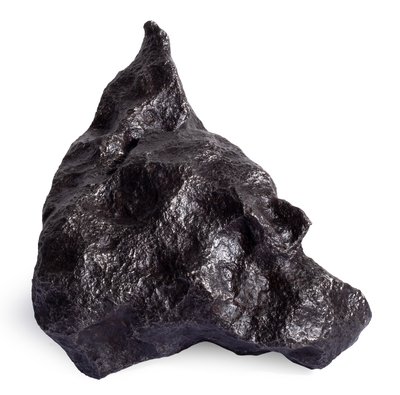
Campo del Cielo
A brief description:
Type: iron meteorite, octahedrite class
Meteorite impact site: Argentina, the Province of Chaco and Santiago del Estero province
The time of the meteorite fall: not recorded, around 4-5 thousand years ago
Date of discovery: 1576
History of study
The Spanish colonial authorities received the first information that there are iron deposits in the north of Argentina in 1576. The Indians told legends about a fireball that fell from the sky and showed their iron weapons. The specimens obtained were described as unusually pure, but their cosmic origin was not suspected in the 16th century. The re-examination of the area began at the end of the 18th century, and only then, the meteorite nature of the discovered iron fragments was clarified. Since then, the Campo del Selo meteorite has become an object of interest for both scientists and collectors. One of the first large specimens weighing 634 kg was transferred to the British Museum. Later on larger specimens have been found, including El Chaco weighing 28,840 kg and Gancedo weighing 30,800 kg. The total mass of the fragments exceeds 60 tons (the mass of the Goba meteorite), making Campo del Selo the largest iron meteorite ever found.
General information
Campo del Cielo is an iron meteorite from the octahedrite class. In the chemical composition of the Campo del Selo meteorite prevails iron (92.6%) and nickel (6.7%) with the impurities of cobalt, phosphorus, iridium, gallium and germanium. Large fragments are found in meteorite craters (26 of which are known) located in an elongated area of 3 by 18.5 km. The fragments vary greatly in size and weight, from ten grams to several tons or more. The total weight is estimated at 100 tons. The meteorite fall time was calculated based on radiocarbon analysis of burnt wood in craters and is estimated at 2.2 - 2.7 thousand years BC. The age of the meteorite is about 4.5 billion years.